Palestine Action High Court Ruling: A Significant Defeat for the UK Government
In a landmark decision, the High Court has declared the UK Home Office's proscription of Palestine Action under terrorism legislation to be unlawful. This ruling represents a considerable setback for the government, with potential ramifications for hundreds of existing criminal prosecutions against supporters of the group. For Palestine Action co-founder Huda Ammori, the verdict on Friday was hailed as a "monumental victory," underscoring the judiciary's role in upholding civil liberties against executive decisions.
The core of the High Court's judgment, delivered by Justice Victoria Sharp, found the proscription of Palestine Action to be "disproportionate." Critically, the court determined that the ban resulted in a "very significant interference with the right to freedom of speech and the right to freedom of assembly." This decisive ruling brings into sharp focus the balance between national security concerns and fundamental human rights, a perennial challenge for democratic states. The **Palestine Action High Court** case has ignited further debate on the boundaries of protest and the government's power to label organisations as terrorist entities.
A Landmark Ruling Against Government Overreach
The High Court's detailed examination of the evidence led three senior judges to conclude that only a minuscule fraction of Palestine Action's activities could be categorised as terrorism. Their judgment highlighted that the group's actions had not met the stringent "high bar" required for an organisation to be formally designated as terrorist. This finding directly challenged the Home Office's assessment, indicating a significant divergence in how the law was applied and interpreted.
Justice Sharp, alongside Mr Justice Swift and Ms Justice Steyn, acknowledged that Palestine Action "promotes its political cause through criminality and encouragement of criminality." However, they emphatically stated that existing criminal law provides sufficient mechanisms to prosecute such acts. This distinction is crucial: while criminal behaviour is not condoned, the judges argued that it does not automatically elevate an organisation to the status of a terrorist group, especially when such a designation carries profound implications for free expression and association.
One of the most concerning aspects highlighted by the ruling was the "chilling effect" the ban had on broader civil society. Journalists, academics, and other campaigning groups testified that the proscription made them hesitant to speak or act, even when their intended actions would have been entirely lawful. This fear of inadvertently falling foul of broad anti-terrorism legislation demonstrates how government overreach can stifle legitimate public discourse and restrict fundamental freedoms, extending far beyond the immediate targets of such bans. For a deeper look at the impact on civil liberties, you can read more here: High Court Slams Palestine Action Ban: Freedom of Speech Victory?
The Home Office's Misstep: Proportionality and Policy Failures
The High Court's judgment meticulously dissected the decision-making process that led to Palestine Action's proscription. The then Home Secretary, Yvette Cooper, decided to ban the group in July, following incidents where activists allegedly broke into an RAF base and damaged military aircraft. However, the judges found a critical flaw in this decision: Ms Cooper had failed to adequately consider whether imposing a terror ban on Palestine Action was "proportional" to the threat the organisation posed.
This oversight was deemed a "significant" error, particularly because it meant the Home Secretary had failed to adhere to the Home Office's own established policy on proscription. The principle of proportionality is a cornerstone of human rights law, requiring that any restriction on fundamental rights must be necessary, appropriate, and no more severe than required to achieve a legitimate aim. By neglecting this vital consideration, the government's decision was found to be legally unsound, opening it up to challenge and subsequent defeat in the High Court. The judges' ruling went further, suggesting that "the strength of the case for proscription may need to be considered further by the home secretary," implying a necessity for a complete re-evaluation.
What This Means for Palestine Action and Public Protest
Despite the High Court's ruling, the proscription of Palestine Action technically remains in effect for now, as the government has declared its intention to appeal the decision. This creates an unusual and legally complex situation. While the ruling makes it clear that the ban was unlawfully imposed, it still constitutes a criminal offence to support or be a member of Palestine Action, punishable by up to 14 years in prison. Since the proscription was first enacted last July, thousands of individuals have reportedly been arrested merely for displaying placards in support of the group.
However, the High Court's judgment has already prompted a shift in enforcement. The Metropolitan Police have indicated that officers will no longer arrest individuals simply for showing support for Palestine Action. Instead, they will concentrate on "gathering evidence of those offences... to provide opportunities for enforcement at a later date," acknowledging these "unusual circumstances." This represents a tangible, albeit temporary, change in policing strategy, reflecting the immediate impact of the judiciary's intervention.
The legal battle is far from over. Lawyers for Huda Ammori and the Home Office have until February 20th to submit further arguments to the court. These submissions will pave the way for additional hearings that will ultimately determine whether the ban should be lifted entirely and whether the case will proceed to the Court of Appeal. The financial implications of this legal struggle are also noteworthy: the Home Office has already reportedly spent £700,000 in legal fees fighting Ms Ammori's challenge, a figure that underscores the high cost of defending executive decisions in the face of human rights challenges. For more details on the financial aspect, see: Unlawful Palestine Action Ban: Home Office Spent £700k Fighting Case
Financial Ramifications and Future Outlook
The substantial sum of £700,000 spent by the Home Office on legal fees illustrates the immense resources governments commit to defending their policies, even when those policies are later deemed unlawful. This expenditure is particularly striking given the High Court's conclusion that the Home Secretary failed to follow established policy and consider proportionality. Beyond the immediate financial cost, the ruling casts a long shadow over the hundreds of criminal prosecutions that have been initiated since the ban was first imposed. It raises serious questions about the legal basis of these ongoing cases and could lead to their collapse, potentially requiring substantial compensation or a complete re-evaluation by the Crown Prosecution Service.
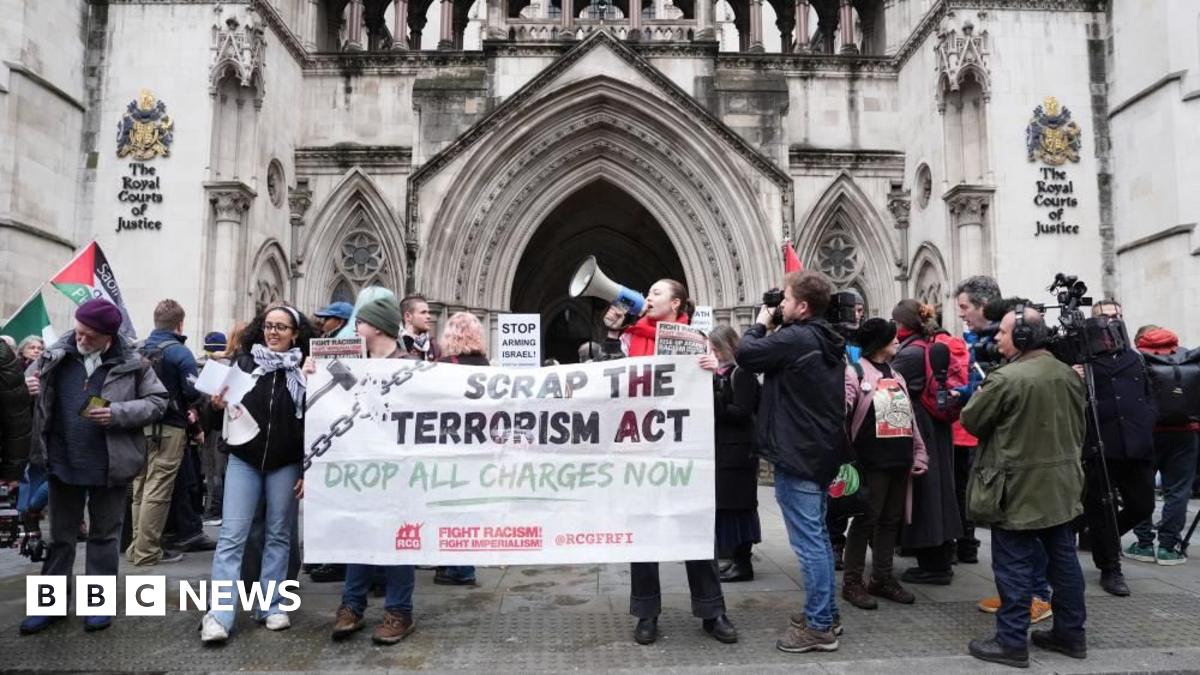
The public reaction to the judgment was immediate and palpable. Outside the Royal Courts of Justice in central London, approximately a hundred people gathered, erupting in cheers and chanting "Free Palestine" as news of the judges' decision broke. This spontaneous demonstration highlights the significant public interest and emotional investment in the case, particularly concerning the rights to protest and express solidarity. The ongoing legal process, with deadlines for further submissions and the looming possibility of an appeal, ensures that the debate surrounding Palestine Action, the right to protest, and the scope of anti-terrorism legislation will continue to dominate legal and public discourse in the UK.
The High Court's ruling in the **Palestine Action High Court** case marks a pivotal moment for civil liberties in the UK. While the immediate effects of the ban remain in a state of flux pending further legal proceedings, the judgment sends a clear message: executive power, even in matters of national security, is subject to judicial scrutiny and must adhere to principles of proportionality and human rights. This victory for freedom of speech and assembly reinforces the critical role of the judiciary in safeguarding fundamental rights against potential government overreach, ensuring that the bar for labelling an organisation as 'terrorist' remains exceptionally high.