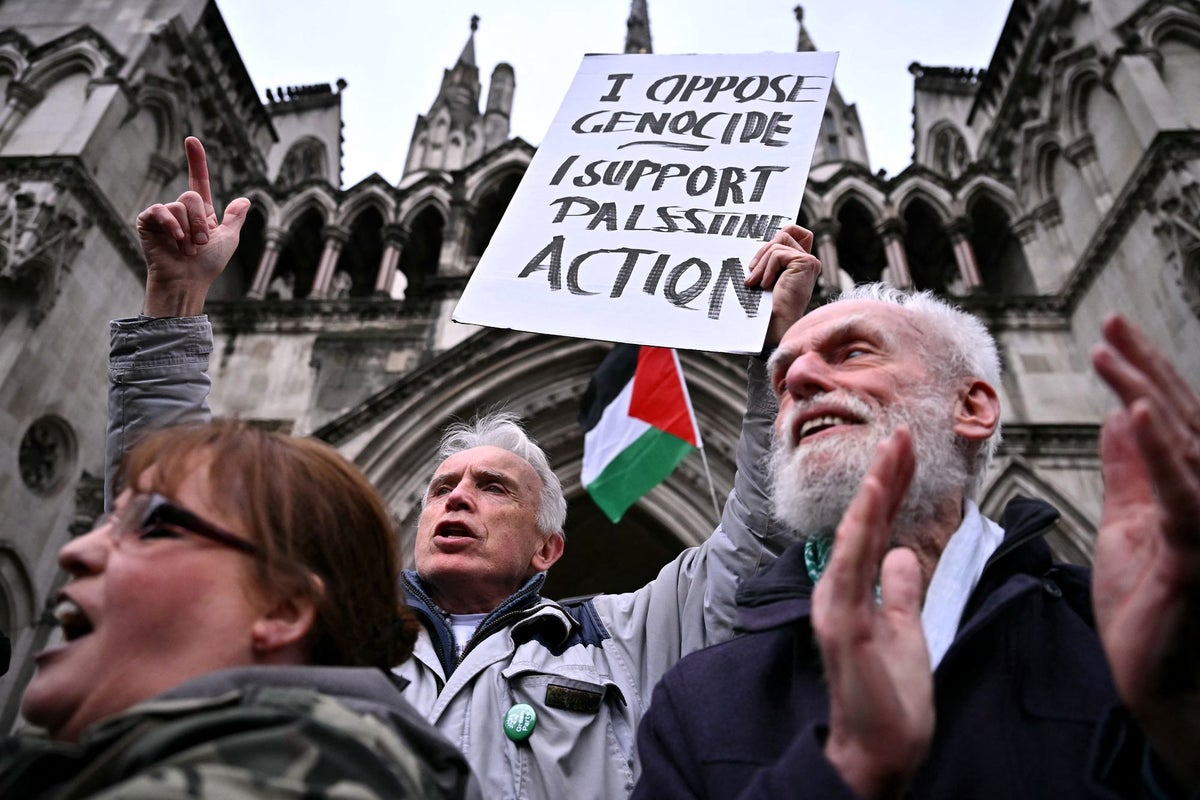
High Court Slams Palestine Action Ban: A Resounding Freedom of Speech Victory?
In a landmark decision sending shockwaves through political and legal circles, the High Court has declared the Home Office's proscription of Palestine Action under terrorism legislation to be unlawful. This ruling represents a significant blow to the government and a monumental moment for advocates of free speech and the right to peaceful assembly in the UK. For Palestine Action and its supporters, it’s not merely a legal win, but a powerful affirmation of fundamental civil liberties.
The implications of this ruling are vast, potentially leading to the collapse of hundreds of criminal prosecutions against individuals who have merely expressed support for the group. While the battle isn't entirely over, the judgment from the Palestine Action High Court case has ignited a crucial debate about the boundaries of state power and the protection of protest rights.
The High Court's Landmark Decision Against the Palestine Action Ban
The High Court's verdict on the Palestine Action ban was unequivocal: unlawful and disproportionate. Justice Victoria Sharp, alongside Mr Justice Swift and Ms Justice Steyn, delivered a judgment that meticulously dissected the Home Office's rationale for proscription. A key finding was that only a very limited number of Palestine Action's activities could genuinely be classified as terrorism, falling well short of the stringent "high bar" required to designate an organisation as a terrorist entity under UK law. The judges explicitly stated that the group's actions had not crossed this threshold.
Huda Ammori, co-founder of Palestine Action, hailed the decision as a "monumental victory," a sentiment echoed by civil liberties groups across the country. Justice Sharp’s observation that the proscription "did result in a very significant interference with the right to freedom of speech and the right to freedom of assembly" underpins the core of this legal triumph. This isn't just about a specific group; it's about safeguarding the democratic right to dissent and expression, even when those expressions are critical of government policy or corporate interests.
Immediately following the ruling, the Metropolitan Police acknowledged the "unusual circumstances," stating that officers would no longer arrest individuals solely for showing support for Palestine Action. Instead, they would "focus on gathering evidence of those offences... to provide opportunities for enforcement at a later date." This pivot highlights the profound practical impact of the High Court's decision, even as the government signals its intent to appeal, leaving the ban technically in place for now. Until further hearings conclude and potential appeals are exhausted, supporting or being a member of Palestine Action still carries a potential sentence of up to 14 years in prison, a stark reminder of the ongoing legal tightrope.
Unpacking the "Unlawful" Proscription: Proportionality and Policy Failures
Central to the High Court’s condemnation of the Palestine Action proscription was the glaring failure to consider proportionality. Former Home Secretary Yvette Cooper, who made the decision to ban the group in July last year (following incidents involving damage to military aircraft at an RAF base), was found to have made a "significant" error by not adhering to the Home Office's own policy on proscription. This policy mandates a thorough assessment of whether such a severe measure is proportional to the threat posed by an organisation.
The court emphasised that any decision to proscribe an organisation is subject to human rights law. This means the Home Secretary cannot implement a ban that disproportionately restricts the fundamental rights to freedom of expression and assembly, not just for the targeted group, but also for others who might inadvertently be caught in its chilling effect. This legal principle is crucial for protecting the broader civic space. Evidence presented during the case illustrated this point vividly, with journalists, academics, and other campaigning groups testifying to a discernible "chilling effect," where they felt compelled to self-censor or refrain from lawful activities due to fear of inadvertently supporting a proscribed entity.
The judges meticulously argued that while Palestine Action indeed "promotes its political cause through criminality and encouragement of criminality," existing criminal law is perfectly "sufficient" to prosecute such acts. This distinction is vital: committing criminal damage or trespass is a criminal offense, but it does not automatically elevate an organisation to the status of a terrorist group. The court essentially told the government that it already possessed the necessary legal tools to address illicit actions without resorting to a disproportionate measure that encroiled on human rights.
The Cost of Contention: Financial Implications and Legal Battles
The legal battle surrounding the Palestine Action ban has not been without significant cost. It was revealed that the Home Office has already spent an staggering £700,000 in legal fees fighting Ms Ammori’s case. This considerable sum raises questions about fiscal responsibility and the justification for pursuing a proscription that has now been deemed unlawful. This financial outlay further underscores the gravity of the government's defeat and the resources expended in what the courts have identified as an overreach of power. You can read more about the financial implications and the Home Office's significant expenditure in Unlawful Palestine Action Ban: Home Office Spent £700k Fighting Case.
Despite the High Court's clear judgment, the story is far from over. Lawyers for Ms Ammori and the Home Office are preparing further submissions for the court, with subsequent hearings set to determine whether the ban will be officially lifted and if the case will progress to the Court of Appeal. This indicates that while Palestine Action has secured a vital victory, the legal journey to fully overturn the proscription and ensure its long-term freedom to protest continues. The ongoing nature of this legal challenge highlights the tenacity required to defend civil liberties against governmental power. For further details on the broader context of this legal challenge, delve into Palestine Action Terror Ban Ruled Unlawful: UK Government's Defeat.
A Broader Ramification: Freedom of Speech, Assembly, and the Future of Protest
The Palestine Action High Court ruling is more than just a win for one group; it’s a critical precedent for the future of protest and civil liberties in the United Kingdom. It sends a strong message that the government cannot circumvent fundamental human rights by broadly applying terror legislation to activities that, while potentially criminal, do not meet the high bar of terrorism. This judgment reaffirms the principle that even challenging and disruptive forms of protest are protected under the rights to freedom of speech and assembly, provided they do not genuinely constitute terrorism.
For activists and campaigning groups across the UK, this ruling offers both reassurance and a practical lesson. It reinforces the importance of understanding the legal framework within which they operate and the avenues available to challenge what they perceive as unlawful restrictions. While the High Court has clarified the limits of proscription, it has also explicitly stated that criminal law remains robust enough to address genuine criminal acts committed during protests. Therefore, groups must continue to be mindful of legal boundaries, ensuring their actions, while impactful, do not cross into universally recognised criminal territory.
The judicial suggestion that "the strength of the case for proscription may need to be considered further by the home secretary" serves as a direct invitation for the government to reassess its approach to banning organisations and to ensure future decisions are proportionate, lawful, and respect fundamental rights.
Conclusion
The High Court's ruling against the Palestine Action ban is a significant victory for freedom of speech and assembly, challenging the government's expansive use of terror legislation. It underscores the judiciary's role in safeguarding civil liberties and holding executive power to account. While the legal battle may continue, with potential appeals looming, this initial judgment has undeniably shifted the landscape, offering hope and validation to activists and human rights defenders across the UK. It serves as a potent reminder that in a democratic society, the right to protest, even against powerful interests, remains a cornerstone of liberty, zealously guarded by law.